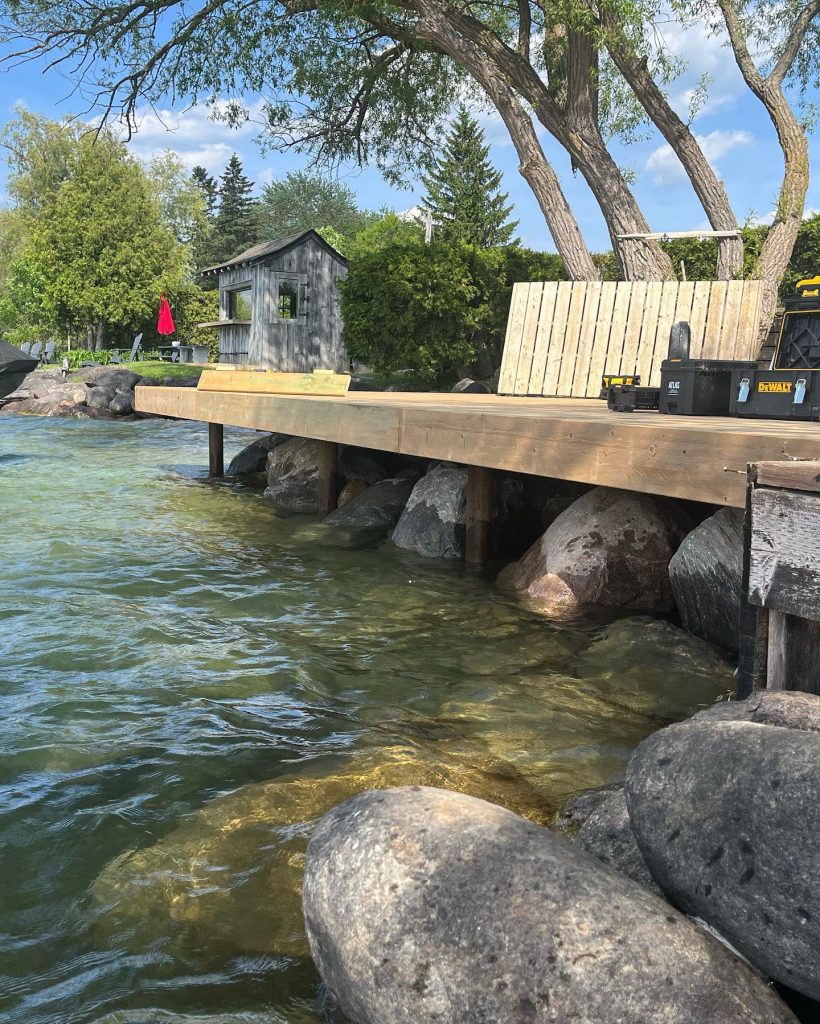
Ontario’s lakes, rivers, and wetlands are beautiful—and delicate. At JR Marine Construction, we’re not just experts in shoreline and water access projects. We’re also on the front lines when it comes to managing and removing invasive aquatic species that threaten local ecosystems and property value.
These aquatic invaders grow fast, spread easily, and choke out native species. Left unchecked, they can create costly maintenance problems and even disrupt recreational use of your waterfront.
Here are some of the most common aquatic invasive plants we encounter in Ontario:
1. Brazilian Elodea (Brazilian Waterweed)
-
What It Is: A submerged aquatic plant often used in aquariums and water gardens (aka “Anacharis”).
-
Where It Grows: Wetlands, ponds, lakes, and slow-moving streams—rooted or drifting in water up to 6 meters deep.
-
Why It’s a Problem: Reproduces from fragments, spreads fast, survives under ice. Once it’s in, it’s hard to control.
2. Eurasian Water-Milfoil
-
Origin: Europe, Asia, and North Africa.
-
Ontario Impact: Found in all the Great Lakes, Lake Erie (since 1961), St. Lawrence River, and inland lakes.
-
Danger: Forms dense mats, blocks sunlight, lowers oxygen levels, and spreads via boat propellers and fishing gear.
3. European Frog-Bit
-
Look For: Floating mats of small, heart-shaped leaves.
-
Habitat: Slow-moving water like ponds, inlets, and ditches.
-
Spread: Fragments, seeds, and winter buds (“turions”). First introduced in Ottawa in the 1930s.
4. European Water Chestnut
-
Where Found: Ottawa River, Wolfe Island, Rideau River, and St. Lawrence River.
-
Risk: Sharp seeds, fast-spreading mats, and major ecological disruption. Often spread through ornamental water gardens.
5. Fanwort
-
Origin: Southeastern U.S. and South America.
-
Ontario Presence: Found in the Crowe River watershed.
-
Hazards: Grows year-round, creates underwater mats, and prefers stagnant or slow-moving water under 3m deep.
6. Hydrilla
-
Nickname: “The Perfect Aquatic Weed”
-
Why It Spreads: Grows 2.5 cm per day, photosynthesizes earlier than other plants, and survives a wide range of water types.
-
Spread Method: Fragments travel via boats, trailers, or gear.
7. Parrot Feather
-
Look For: Feather-like leaves above the water surface.
-
Spread: Entirely vegetative in Ontario (no seeds). Introduced in the 1890s via the aquarium trade.
-
Where It Thrives: Non-tidal waters like ponds and slow streams.
8. Water Hyacinth
-
Origin: Imported in 1884 as an ornamental plant.
-
Threat Level: Creates thick mats that reduce oxygen and block sunlight. Can overflow from backyard ponds into natural waterways.
-
Ontario Status: Not regulated yet, but spreading.
9. Water Lettuce
-
Floating Invader: Resembles a head of lettuce, forms large surface mats.
-
Origin: Uncertain—possibly native to southern U.S., or introduced via ballast water or water gardens.
-
Ontario Sightings: Found in several locations. Scientists are studying its ability to survive local winters.
Got One of These in Your Waterway?
If you suspect any of these invasive species near your dock, marina, or shoreline, it’s time to act. Early removal can prevent bigger problems down the line—and JR Marine Construction has the tools, experience, and knowledge to help.
✅ Let’s Keep Ontario’s Waterways Healthy
Protect your property, your waterfront access, and the natural environment. Contact JR Marine Construction today—we’ll inspect your site, identify any threats, and offer a safe, effective removal plan.